Seoul
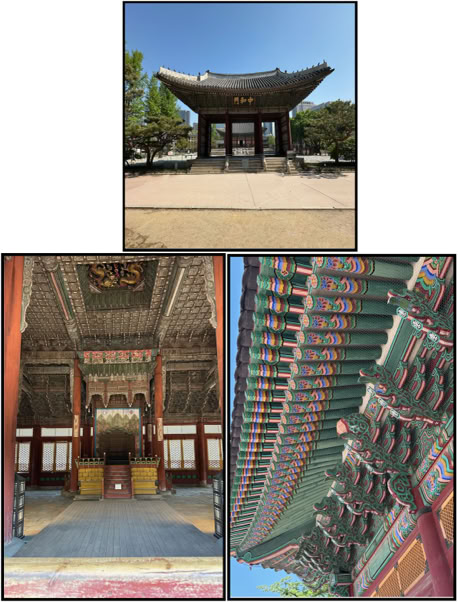
Our first stop was at one of the five palaces that the Korean dynasties used up until 1910. What's interesting is that this particular palace sits in the middle of modern Seoul. Much of modern Seoul consists of very tall, densely packed apartment buildings. Makes sense when you consider there are 20 million people living in the city.
Afterwards we went to Namdemun Market. For nearly 600 years an open air market has existed at this site. There are stalls and shops with everything from food to clothing, eyeglasses, and handmade jewelry. We were able to get Elijah a baseball with the name of a Korean team in Korean: the LG Twins.
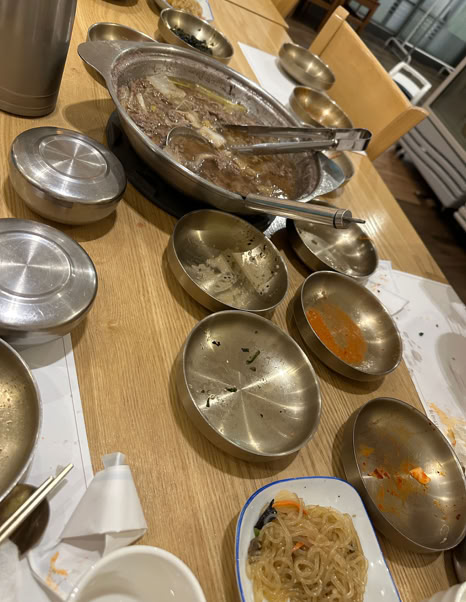
Lunch was provided in a restaurant that specialized in aged on stone beef. The meal seemed to be very traditional with a beef hot pot and all sorts of sides that you added to your bowl. Things like kimchi, mushrooms, and seaweed. It was quite good.
Our last stop was at the third most popular museum in the world--the National Museum of Korea. The exhibits here trace the historical and cultural developments of Korea from prehistoric times through the centuries. Additional exhibits focus on a single aspect of one country or region. For example, the Qu'ran as art.
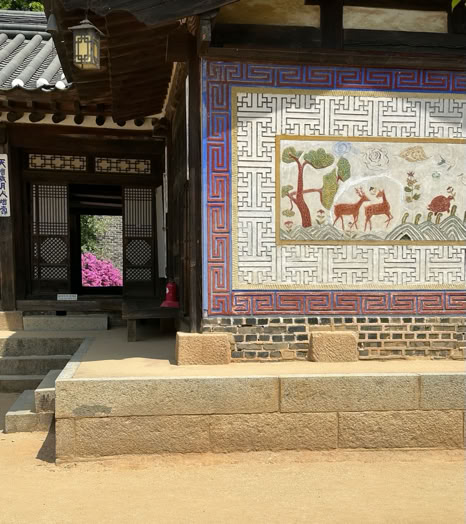
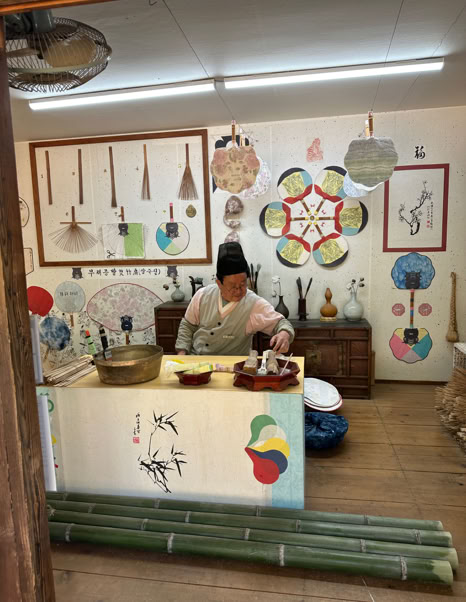
We also visited a “Korean Folk Village”. The place is a historical and cultural recreation of buildings and costumes from about 500 years ago. Some of the buildings are actually from that era and were reassembled on site. There are also some live performances that were quite entertaining. Lots of shops and craft stores, traditional Korean food options that are purchased using a clever kiosk for selections and payments. All in all, interesting to have seen, but not worth repeating.
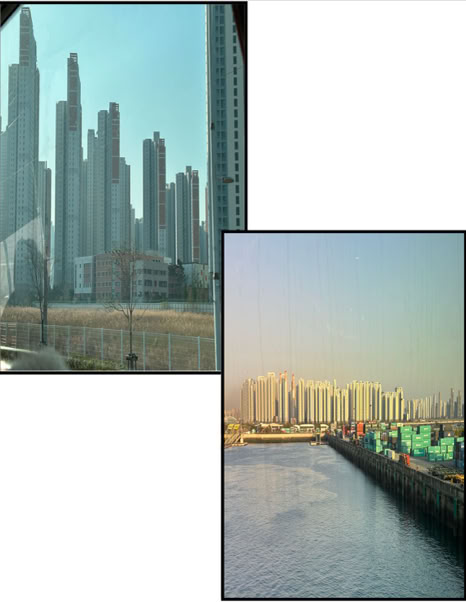
The skyline of Seoul is dominated by multi-story apartment buildings.
The palace in downtown Seoul.
Note the exquisite art and details in the building itself.
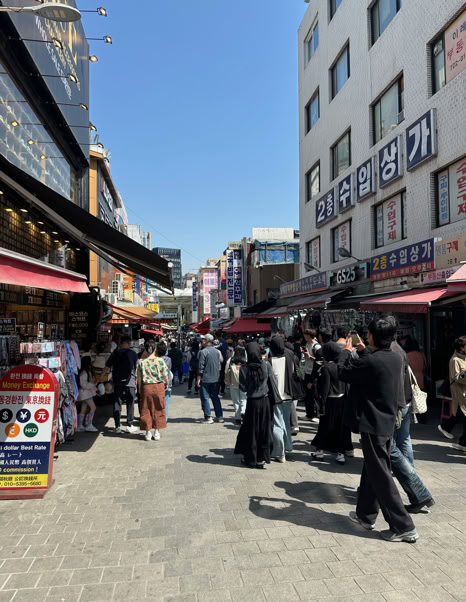
Open air Namdemun market.
The empty bowls after our traditional lunch. The large one at the top with the tongs is the hot pot.