Shanghai
The view of the city from the ship is very impressive. Incredibly tall buildings everywhere, very modern looking. It is the third most important financial city in the world (London and New York being #1 and #2, respectively). This is apparent just from driving through the downtown area and seeing bank building after bank building.
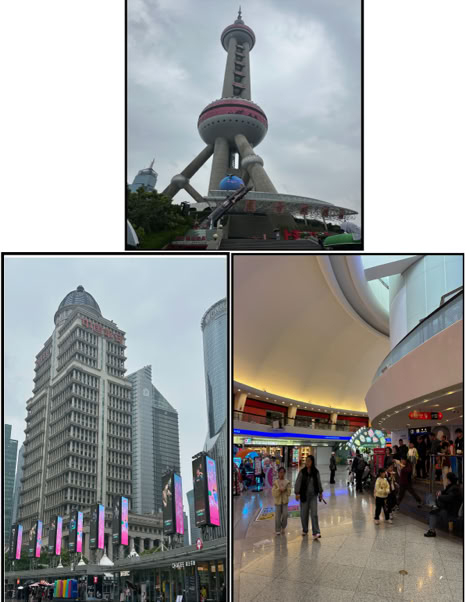
Our excursion began at the Shanghai Historical Museum. As the name implies it presents the history of Shanghai over the past 800 years or so. The museum does this with dioramas arranged chronologically throughout a two-story building. The scenes are very realistic and well done. It was surprisingly interesting. The museum is inside a complex at the base of this futuristic looking television tower. See the photo to believe it. Also found there is an indoor food court and souvenir shop. The whole place was quite crowded with school kids on excursions and families on outings.
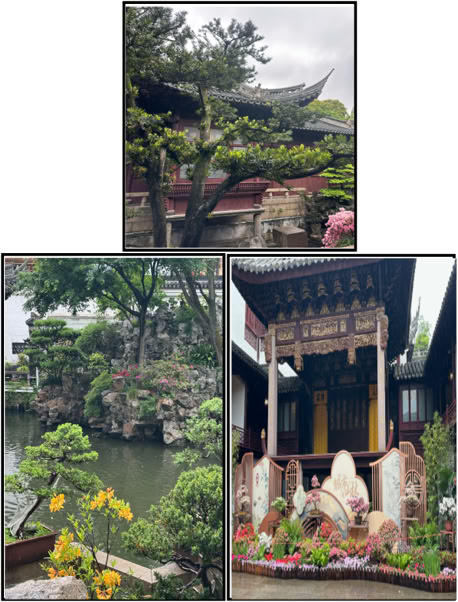
Next we went to the Yuyuan Gardens. Originally a 450-year old private garden built to provide happiness (yua) for the owner's parents, it was later bought by a Shanghai tycoon who did major restorations. Eventually the government took over and it is a major tourist attraction. Beautiful, crowded, historical, interesting. Outside the gardens is a "bazaar", really a mega-collection of shops and food services. Everything from ice cream to jewelry costing in the thousands of US dollars.
We visited the what used to be the French Quarter and the Jewish Ghetto. Jews came to China in the early 11th century, bringing with them, cotton and cotton fabrics. These were new to the emperor, who was used to silk or linen, and he granted these Jews from the west citizenship and gave them Chinese last names. The next wave of Jews came when Great Britain and other countries opened trade to China. However, this wave of Jews in the mid 19th century were Sephardic Jews from Iraq. They brought with them opium and textiles and real estate. These became some of the wealthiest people in Shanghai, if not in all of China. The group after these were Ashkenazi Jews fleeing Russia and the Communist revolution in 1917. These people were more middle class and occupied many of the trade jobs in Shanghai. The last group were the Jews fleeing eastern Europe before, during and after World War II. All the Jews throughout the centuries were accepted and integrated into Chinese society, while retaining their own religion and practices. It was not until World War II and the Japanese occupation of China that Jews were singled out. Not by the Japanese, but by Nazis, encouraging the Japanese to exterminate all the Jews. The Japanese resisted this "request" and compromised by moving the 14,000 or so Jews in Shanghai who arrived after 1938 into a secluded ghetto-type area. There were no walls, but the people remain confined under Japanese control. It is the remains of this ghetto that is commemorated in the Shanghai Museum of Jewish Refugees.
This museum is a multimedia wonder. It is an absolutely thorough and seemingly complete documentation and presentation of the life of the Jews at that time. A theme of the whole museum, as stated at the outset by China, is one of reverence for family and education. By the Jewish people, as it is by the Chinese people.
The French Quarter section is a collection of upper class, name brand stores and expensive real estate. It is where many of the retired Chinese government officials choose to live today.